Getting Started with SFTP Gateway 3.x
TLDR - Quick Summary
What: Deploy SFTP Gateway on GCP to transfer files to Cloud Storage via SFTP (BYOL — free to deploy)
Deploy: GCP Marketplace > SFTP Gateway > Get Started > Deploy (configure VM size, firewall rules)
License: Start a free 30-day trial directly from the web admin interface — no license key required
Recommended VM:
e2-mediumfor testing,n2-standard-2for productionPorts: 22 (SFTP), 2222 (SSH), 80/443 (Web Admin)
Introduction
SFTP Gateway is a pre-configured SFTP server that transfers files to Google Cloud Storage. You can read and write live files to Cloud Storage using an SFTP client like FileZilla.
The SFTP Gateway listing on the Google Cloud Marketplace uses BYOL (Bring Your Own License) pricing — the software is free to deploy, and you only pay for the underlying Google Cloud infrastructure. After you deploy, you can start a 30-day free trial directly from the web admin interface. When you're ready to license your deployment, book a call with our Sales team and we'll match you with the license tier that fits your needs.
To start, provision SFTP Gateway from the Google Cloud Marketplace. This takes you to the VM creation wizard in the Google console.
Here, you will configure VM settings such as the VM size, and Firewall rules to open up SFTP access while restricting ports reserved for admin use.
Google Marketplace Steps
Navigate to the SFTP Gateway product on the Google marketplace.
You should see the following screen:
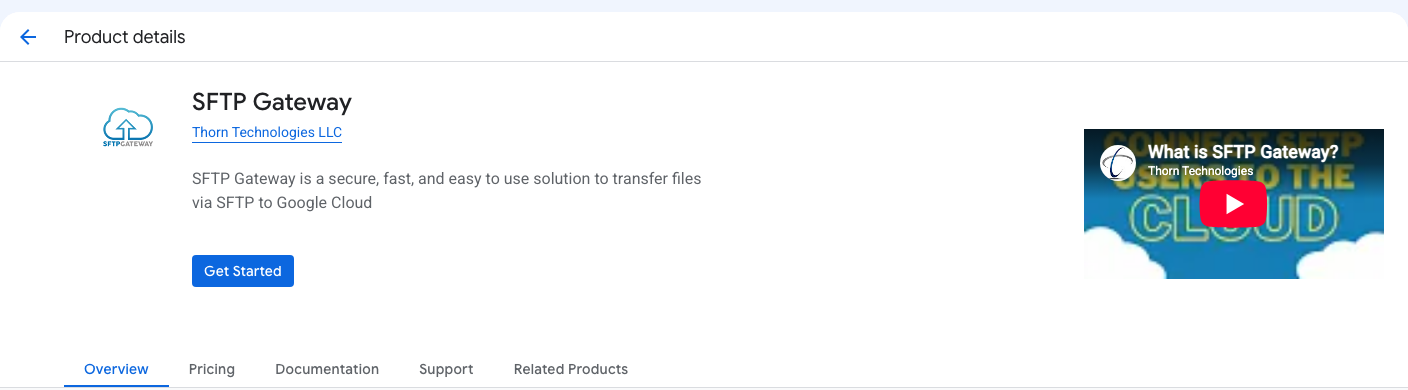
Click GET STARTED, and you will be taken to the Agreements page.
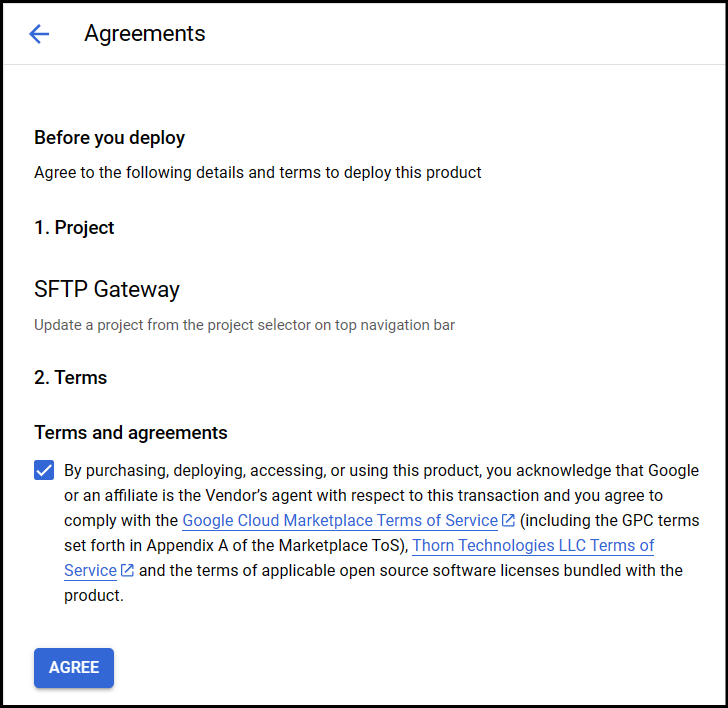
After successfully agreeing to the terms, click Deploy to be brought to the SFTP Gateway deployment page.
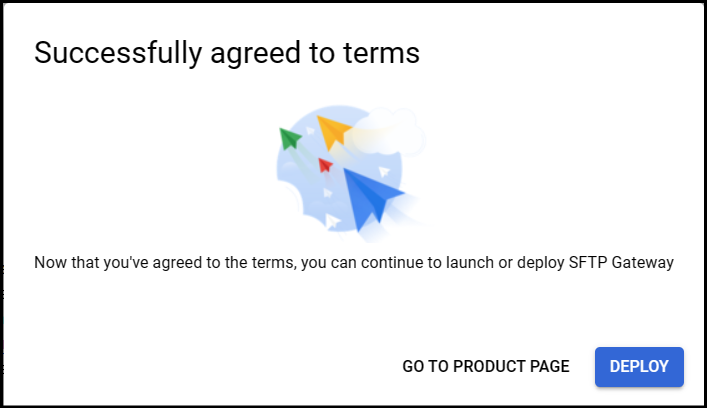
On the deployment page, you will configure your SFTP Gateway deployment.
Create a VM
First, create a Deployment name. Since this is Linux, try to use only lowercase letters and hyphens.
Select a Zone in which to deploy your virtual machine.
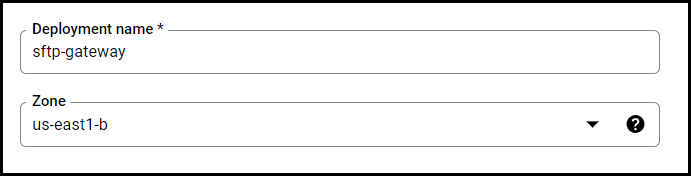
For the Machine type, we recommend a General-Purpose E2 Series machine for testing and evaluation. We recommend at least a size of e2-medium.
Note: Do not use an e2-small, since it does not have adequate CPU.
For production environments with a heavy workload, we recommend using an N2 Series machine such as n2-standard-2.
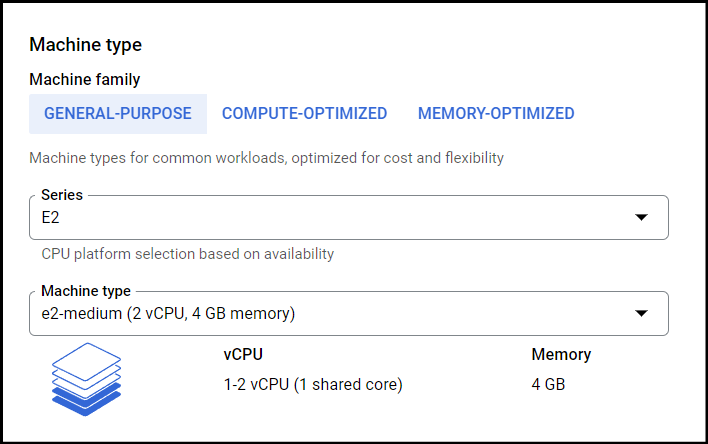
The Boot Disk can be left as default since the disk will only contain the OS and rotated log files.
The Network Interface may also be left as default unless you want to use your own specific network and subnet.
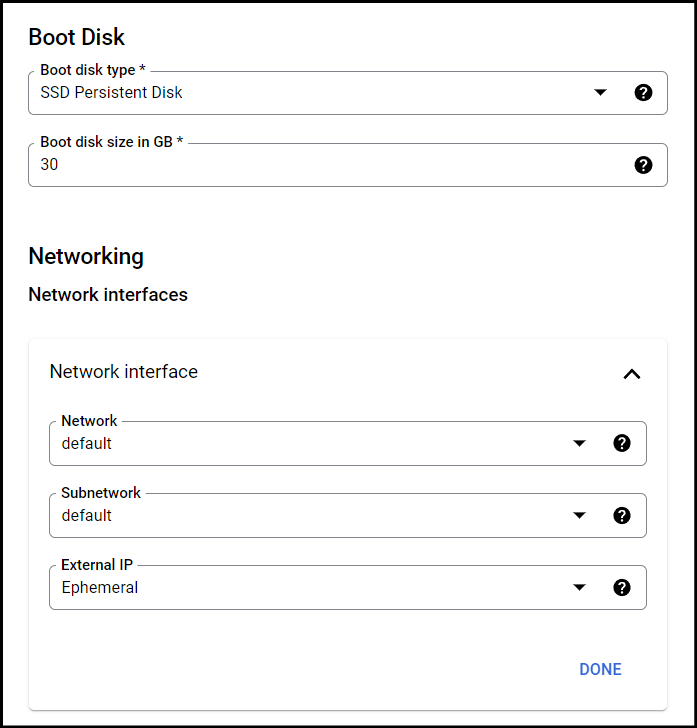
SFTP Gateway exposes the following ports and protocols:
22: SFTP2222: SSH80: HTTP443: HTTPS
Check the box for each rule:
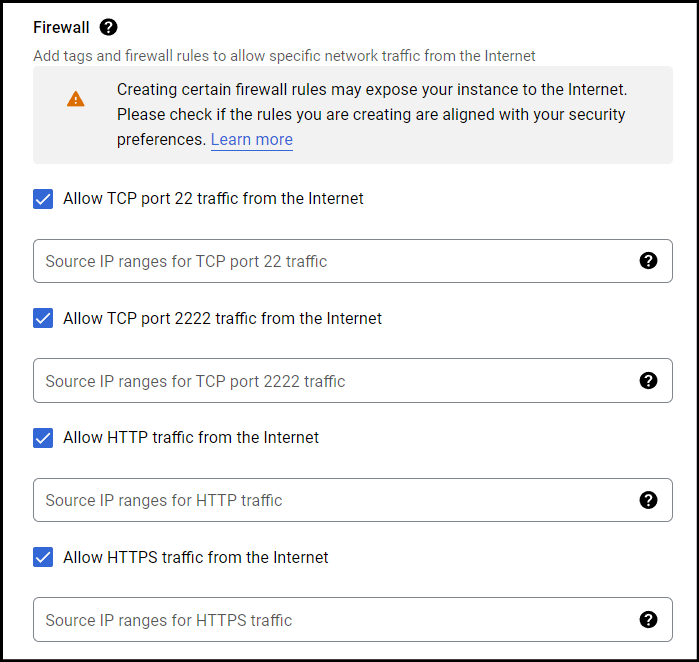
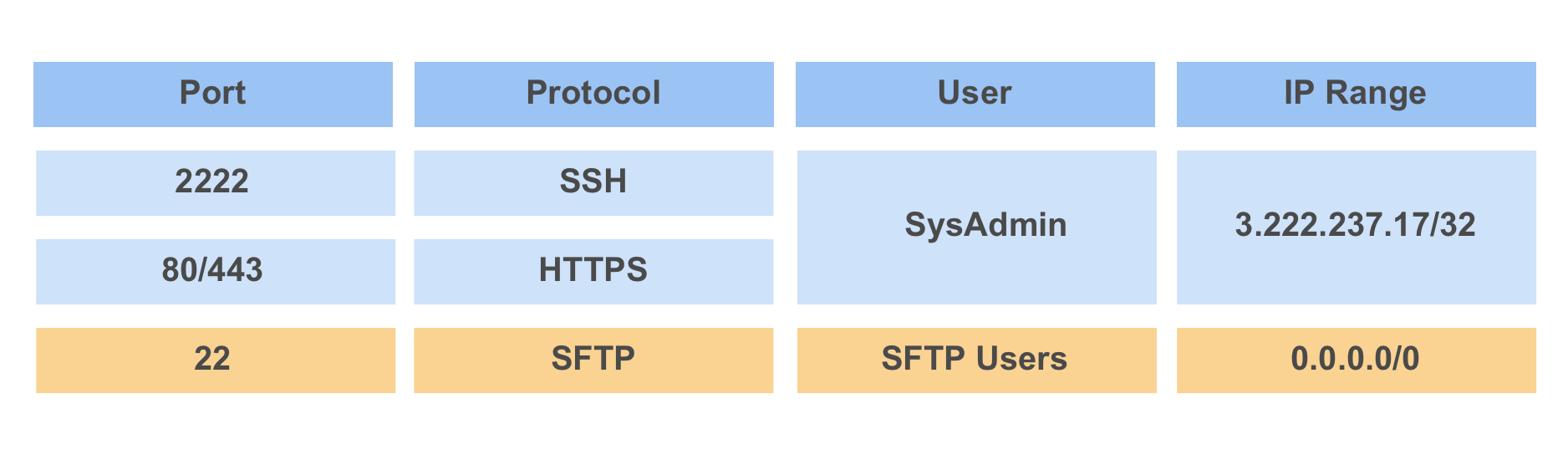
For port 22, paste in 0.0.0.0/0. The SFTP protocol runs on TCP port 22, and for most implementations you would open this port to the world instead of manage the public IP of every SFTP client.
For the remaining ports, paste in your public IP address. To determine your public IP, go to http://checkip.dyndns.org/
The SSH protocol, which has been moved to port 2222, should be restricted to sysadmins.
Note: Remember to specify the port number -p 2222
when connecting via SSH.
Web ports 80 and 443 are used for the Web Admin Portal.
It's important to restrict these ports to sysadmins as well, because the Web Admin Portal
lets you create an admin account on first launch.
Here's a table of the various ports and protocols.
After you have configured everything on the SFTP Gateway deployment page, check the box at the bottom for accepting the GCP Marketplace and Thorn Technologies Terms of Service.
Finally, click Deploy.
Access the Admin Interface
To access the SFTP Gateway admin interface, go to the Site address once your deployment has finished.
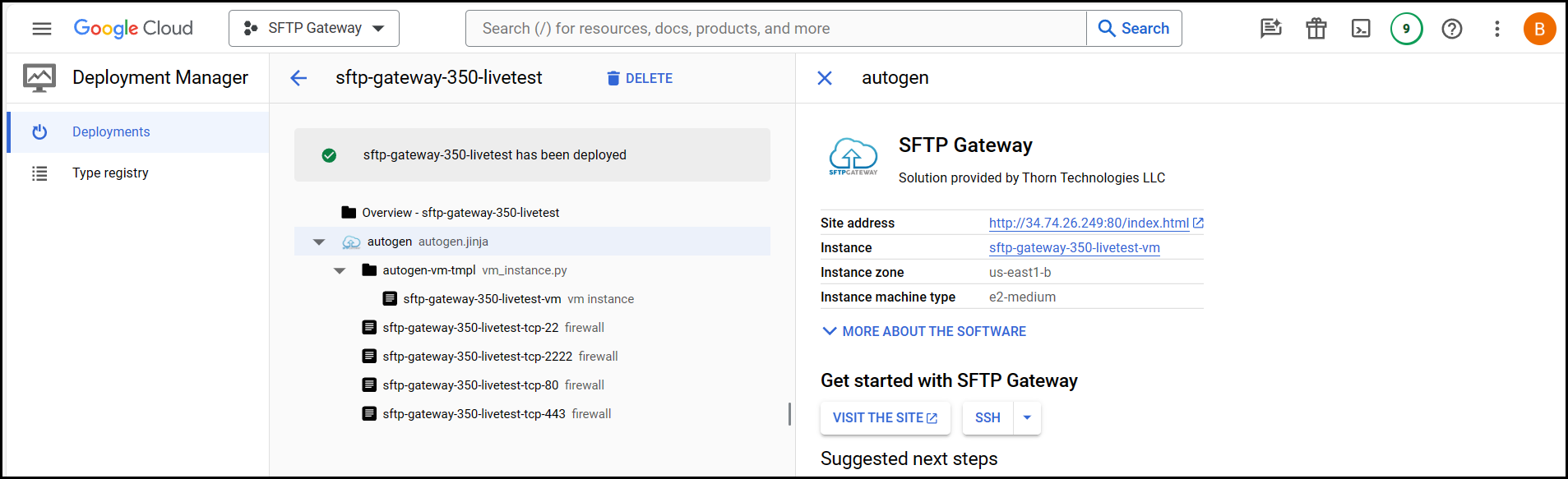
The web interface uses a self-signed SSL certificate out of the box, so your browser will show a warning — click Advanced and proceed to the site.
On first launch, you will be prompted to create your web admin account. Enter a username and password, and click Create Account, then sign in with your new credentials.
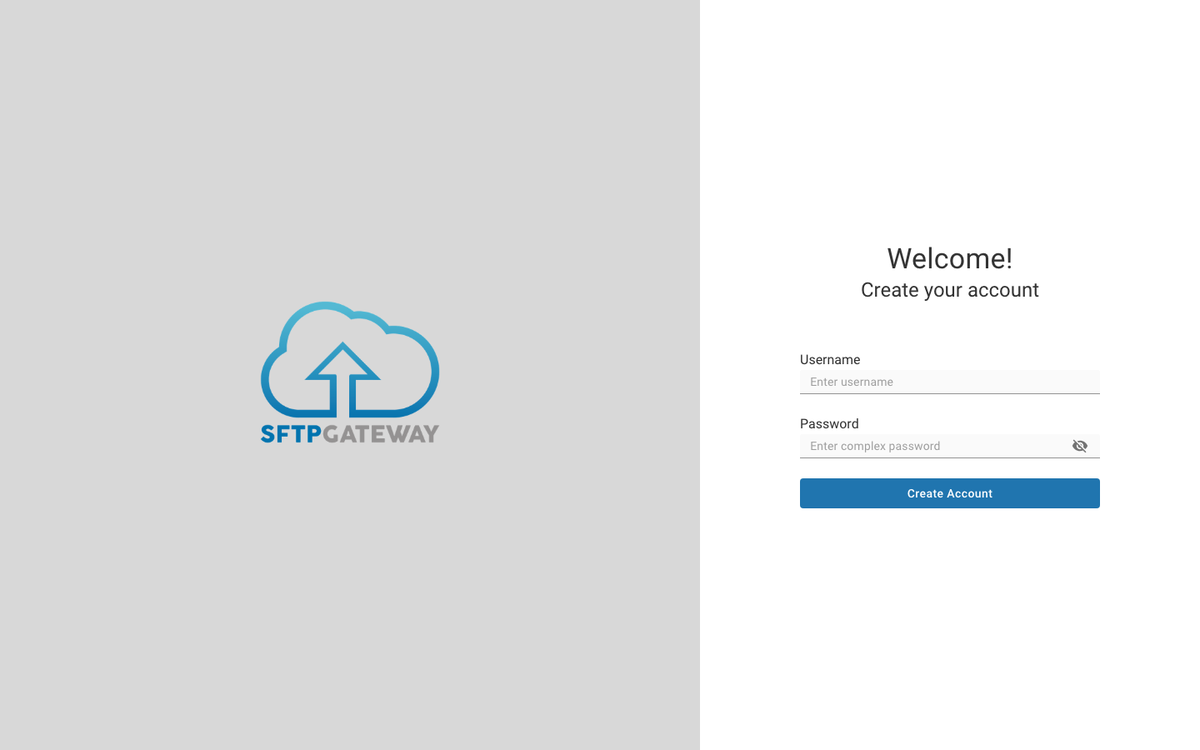
For more detail, see the First Launch Experience.
Start your free 30-day trial
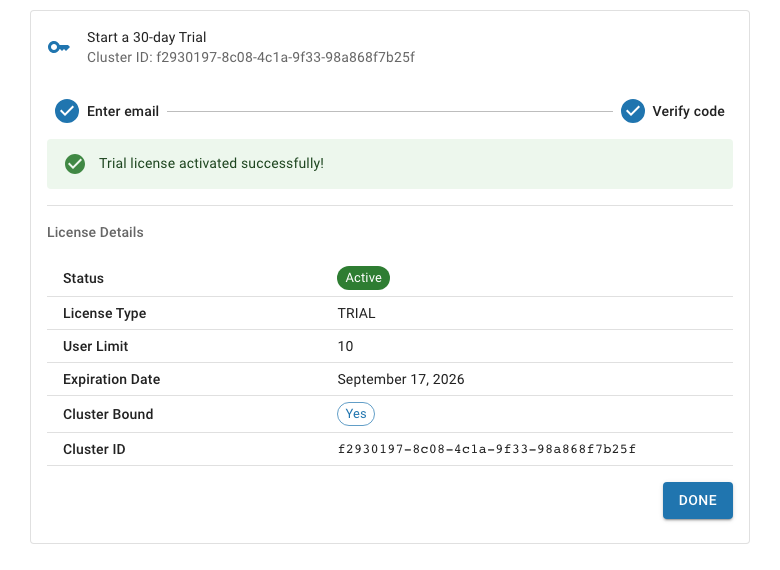
The first time you sign in, SFTP Gateway will prompt you to start a 30-day Trial. The trial license is free and is bound to your deployment's Cluster ID.
Enter your email address, check the box to agree to the End User License Agreement, and click CONTINUE.
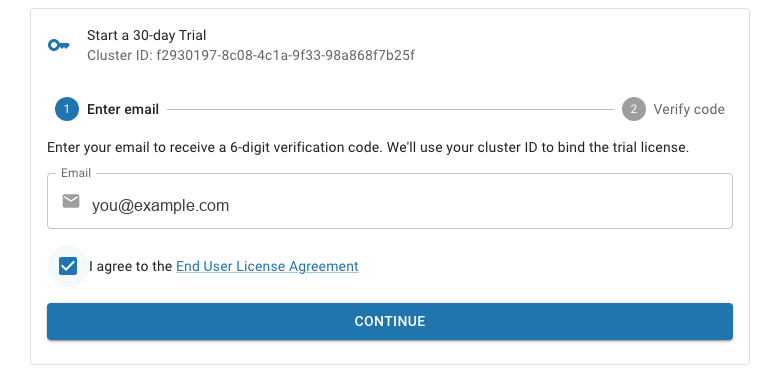
A 6-digit verification code will be sent to your email address (check your spam folder if you don't see it). Enter the code and click VERIFY.
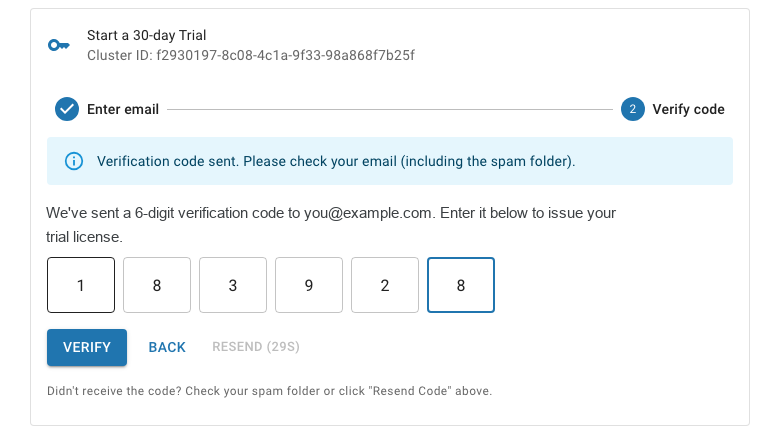
Your trial license is now active. The license details show the TRIAL license type, your user limit, and the expiration date.
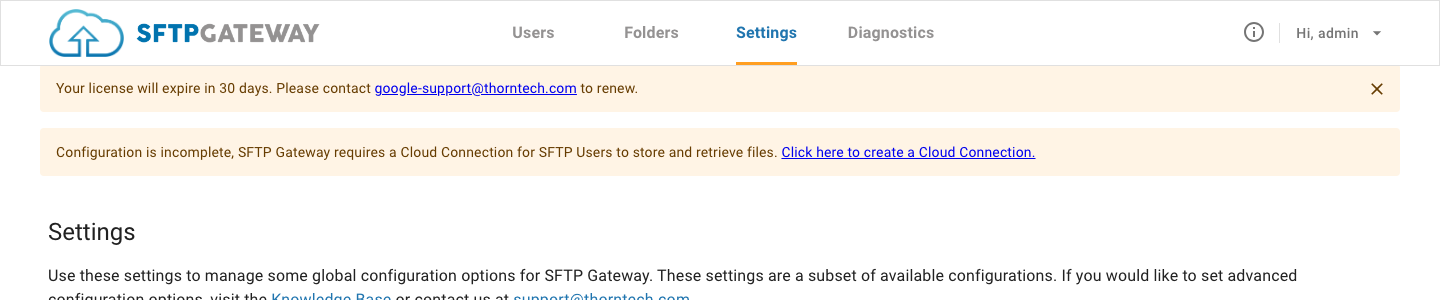
While the trial is active, the Settings page shows a reminder with the time remaining on your license.
When you're ready to license your deployment — or any time during your trial — book a call with our Sales team for a license that fits your needs.
Video Example
For more information, we have a video that walks through setting up SFTP Gateway on Google Cloud.